Kolkata is not a city, it’s a living poem
Introduction: The city that walks in the dust and talks in literature
Kolkata is not just a city. It is a feeling, a way of life, a pervasive emotion. The smell of poetry in the air here, the story hidden in the bell of the tram, and the time to sip tea in the pot stops. From where the sun rises in the rhythm of Rabindra Sangeet, and the lamp of Kalighat named Raat shines.
Let’s explore Kolkata – its oligarchy, its traditions, its food, its books and its people.
The City of History
The history of Kolkata is a multicolored picture. The journey to modern Kolkata began in 1690 under Job Charnock of the East India Company. It was the capital of India during the British rule (1773-1911). Since then, the city has become a centre of education, art, literature and politics.
Blessed with the footsteps of Rabindranath Tagore, Netaji Subhas Chandra Bose, Swami Vivekananda, Satyajit Ray, this city carries their legacy even today.
A place where time stands still
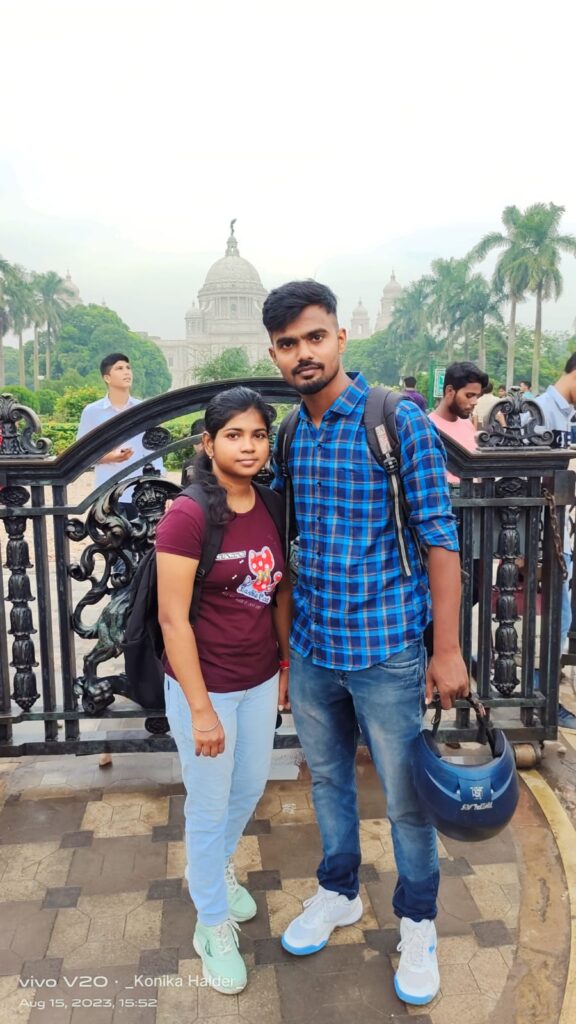
1. The Victoria Memorial
This royal building made of white marble has the smell of history as well as beauty like a picture. Inside there is a museum, outside you want to lie on the green grass.
2. Kalighat Temple
Thousands of devotees visit this temple dedicated to Maa Kali in the heart of Kolkata every day. Along with the Puja here, the pulse of the city can also be felt.
3. Eden Gardens
It is the largest cricket stadium in India. A must visit place for cricket lovers.
4. Howrah Bridge and Vidyasagar Bridge
These two bridges over the Ganges symbolize the two periods of the city. British construction on the one hand, modern engineering on the other.
5. Southerner
This temple associated with the spiritual touch of Vivekananda with Sister Nivedita is situated on the banks of the Ganges. Both the mind and the body are at peace.
6. The Indian Museum
The oldest museum in India, where from prehistoric skeletons to Egyptian mummies can be seen.
A tongue-in-cheek story of Kolkata’s food
Food is the soul of Kolkata. Food isn’t just a feeling – it’s an experience.
Phuchka: On giving tamarind water and potato filled phuchka in mouth body stops, mind says “One more! “
Fish broth and rice: The everyday love of Bengalis.
Sukto, Chachdi, Dahi Katla: A mark of achievement for housewives on the day of the festival.
Prawn malaykari, cobbler’s bell, patal patty.
Sweets: Rosogolla, sandesh, sweet curd – a trip to Kolkata is not complete without sweets.
Tea on the road – a cup of tea around the world!
A Kolkata market – shopping full of stories
1) The New Market
In this market built in 1874, along with centuries old shops, new fashions are also found. Clothes, watches, shoes – everything is there.
2) Elephants and elephants
Terracotta jewellery, cotton saris, boutique work, authentic Bengali-style handicrafts – all are available here.
3) Cucumbers
Alleyways for making idols, where the smell of the soil and the hands of the artist get embodied together. Especially before the Durga Puja, there is a wave of industry in this area.
4) The Book Market on College Street
It is one of the largest book markets in the world. Old books, rare manuscripts, a cup of tea – a paradise for book lovers.
Transport system
Air route
Netaji Subhas Chandra Bose International Airport (CCU) is located in the north of the city, connecting the country and abroad.
railway
Howrah, Sealdah, Kolkata stations: Trains are available from all parts of India. Taxis and metro are easily available.
Roads and urban transport
India’s first metro rail
Tram – the century-old electric tram is still running today
Buses – both public and private
Taxi – Yellow Taxi is one of the most famous images of Kolkata.
Hand-pulled rickshaws – still seen in some areas today
best time to visit kolkata
From October to March
October: Durga Puja – the city glitters with lights, decorations, and emotions
December: Christmas and New Year’s festivities, lights and merriment on Park Street
March: Spring Festival, Book Fair – Colors of Culture Spread
Temperatures are very high in summer (April-June), with occasional heavy rains during the rainy season (July-September).
A place to walk around
1. Sundarbans
Located in the delta region of the Ganges, Brahmaputra and Meghna, this forest is famous for the Royal Bengal Tiger and mangrove trees.
2. Shantiniketan
Rabindranath Tagore founded Visva-Bharati University. Spring Festival, Poush Mela, Baul Song – a touching experience.
3. Digha and Mandarmani
It is easily accessible by train or car from Kolkata. The cool breeze of the evening and the roar of the sea will touch you.
4. Bishnupur
Terracotta temples, Baluchar paintings, Dhunuchi dance – a perfect combination of soil and culture.
Travel tips
Get out in the morning, better to reach the destination before evening.
Read reviews before eating on the street.
See the city on the tram – a slow, but different experience
Travel Responsibly – Be Respectful of the Environment, History, and the Locals
Take photos, but also remember the city’s hidden beauties
Conclusion – Kolkata: Address of the Mind
Kolkata is that city where poetry can be written sitting on the banks of the Ganges with the sound of a flute. Where on the way one can enter a book shop, one can make friends with unknown people in a tea shop, and one can meet unknown history by walking in a lane.
This city teaches to love slowly, not loudly. Here everything comes together – mourning and joy, history and modernity, politics and literature. People don’t just live here – they think, write, and love.
So if you’re looking for a city where the heart is open, books are in hand, and memories are as sweet as sweets – come to Kolkata. Remember, Kolkata does not end at once. He lives forever in a corner of my mind.
Next Posts
Delhi – the heart of history, the city of civilization
Victoria Memorial Kolkata Tour Information – A Complete Travel Guide